
Graph-Driven Workflow Orchestration
Stratum Orchestrator —
Stateless, Agnostic, Auditable
Cross-project event-driven pipelines declared in Nickel, executed by Nushell, coordinated via NATS JetStream, and persisted in SurrealDB. The orchestrator binary never changes when workflows do.
10 Fundamental Design Characteristics
Graph-Driven — No Routing Tables
NATS subjects are matched against an ActionGraph built from Nickel node definitions. Each ActionNode declares trigger, input_schemas, output_schemas, and compensate. Adding a workflow means adding .ncl files — zero binary changes.
Stateless Orchestrator — DB-First
Every PipelineContext write goes to SurrealDB first, then to an in-memory DashMap cache. On crash, the instance reconstructs from DB. Enables horizontal scaling and crash-free pipeline resumption from last persisted capability.
Nickel as Single Source of Truth
Action nodes, capability schemas, and startup config are all defined in Nickel. No DB copy of node definitions exists at runtime. The ActionGraph is built in-memory at startup via nickel export, then kept live via a notify file watcher for hot-reload.
Capability Model — DI at Execution Level
Nodes do not depend on each other directly — they declare capabilities they produce and consume. The graph engine resolves dependencies. build-crate does not know about lint-crate; it only needs linted-code. Nodes can be swapped or parallelized without changing consumers.
Three Independent Auth Planes
Publisher auth via NATS NKeys (ed25519) controls who can emit events. Workflow authz via Cedar policies controls which pipelines a principal can trigger. Execution credentials via SecretumVault are scoped per-node with TTL equal to the node timeout — revoked on failure.
Saga Atomicity — Compensation Not Transactions
Pipelines execute forward through stages. If a stage fails, the orchestrator runs compensate.nu scripts in reverse order through all previously successful stages. Compensation is best-effort; failures are logged and auditable in SurrealDB — the pipeline still reaches Compensated status.
Parallel Stages — JoinSet + CancellationToken
Within each stage, nodes with no capability dependencies execute in parallel via tokio::task::JoinSet. Fail-fast is implemented via CancellationToken: the first node failure cancels the token, aborting all sibling tasks in that stage immediately.
OCI for Everything — Content-Addressed
Node definitions and the Nickel base library are published as OCI artifacts to a Zot registry. The ncl-import-resolver binary pulls each OCI layer at startup, verifies digest against annotated sha256, then exposes a local path for Nickel imports. Prevents loading unverified definitions.
Nushell as Execution Unit — Agnostic
Each node's handler is a Nushell script. The executor spawns nu --no-config-file script.nu, passes PipelineContext inputs as JSON on stdin, reads output JSON from stdout. The orchestrator has no knowledge of what the script does — hot-replaceable without recompiling.
TypeDialog — Startup Config Only
TypeDialog is used exclusively for orchestrator startup configuration: SurrealDB URL, NATS URL, Zot URL, Vault URL, log level, feature flags. Not for workflow definitions or node configurations — those live in Nickel. Bounded scope, single responsibility.
Key Architectural Decisions
Capability DAG — not a rule router
Topological sort of the capability graph produces a staged execution plan. Each stage is a set of nodes with no inter-dependency. The orchestrator evaluates the graph; it does not hardcode any workflow logic.
Three-Plane Auth — non-substitutable
NKeys authenticate the publisher on the transport. Cedar authorizes the workflow at the orchestrator boundary. Vault scopes execution credentials per-node with TTL = node timeout, injected as env vars and revoked on failure — never in NATS messages or logs.
Saga Compensation — auditable rollback
Compensation scripts run in reverse stage order through all previously succeeded stages. The full trace — including compensation failures — is recorded in SurrealDB. 2PC is not feasible across Nushell subprocesses; Saga is the only realistic atomicity model here.
DB-First State — crash recovery is free
PipelineContext is written to SurrealDB before updating the in-memory DashMap. On restart, the cache is reconstructed from the DB. Multiple instances share one SurrealDB — no split-brain, no coordinator needed. Horizontal scaling is structural, not bolted on.
OCI Distribution — verified imports
nickel typecheck → gitleaks detect → nickel export → sha256sum → oras push with content-hash annotations. The ncl-import-resolver verifies each layer's digest against the annotated hash before exposing it to the Nickel import path — tampered definitions cannot load.
Nushell Executor — domain-agnostic subprocess
Each node spawns nu --no-config-file script.nu. PipelineContext inputs arrive as JSON on stdin; outputs return as JSON on stdout. Each node gets its own process with scoped Vault credentials. Scripts can be tested independently: echo '{}' | nu script.nu.
Architecture & Pipeline Diagrams
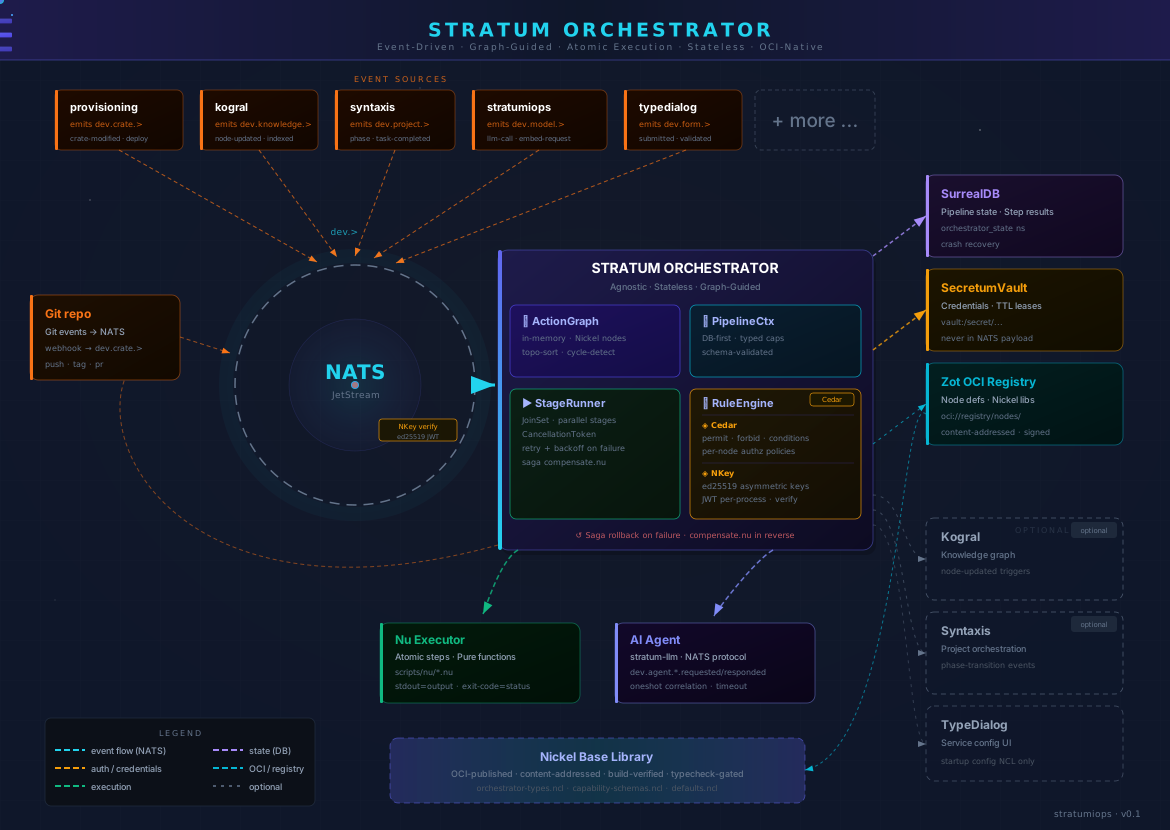
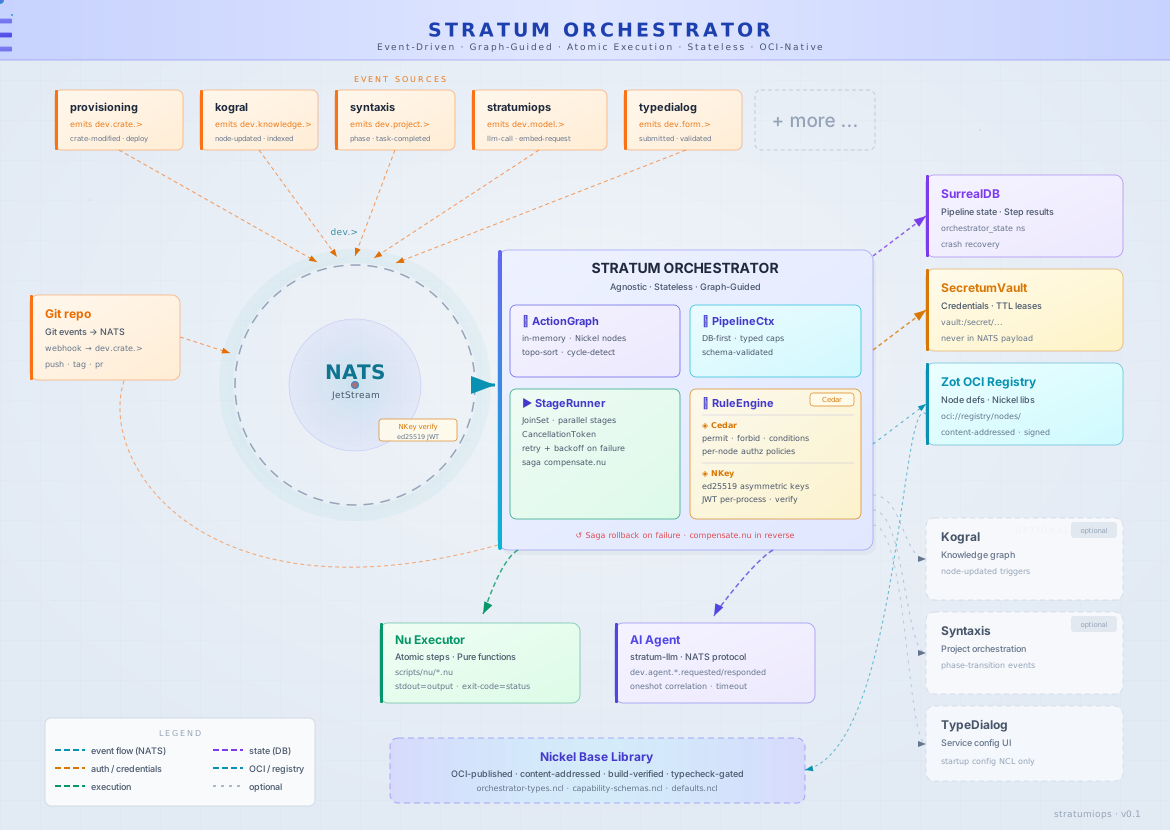
Orchestrator Architecture
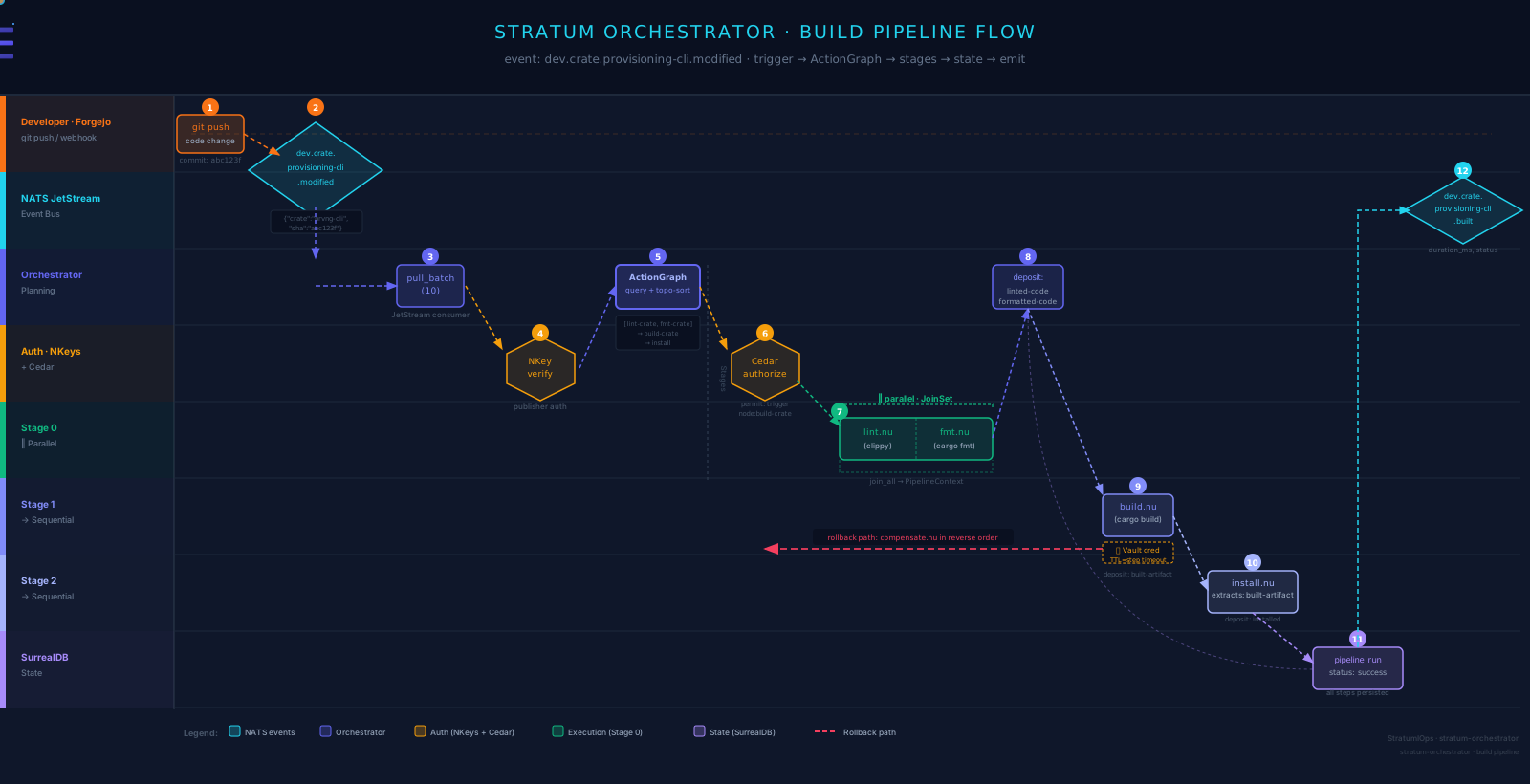
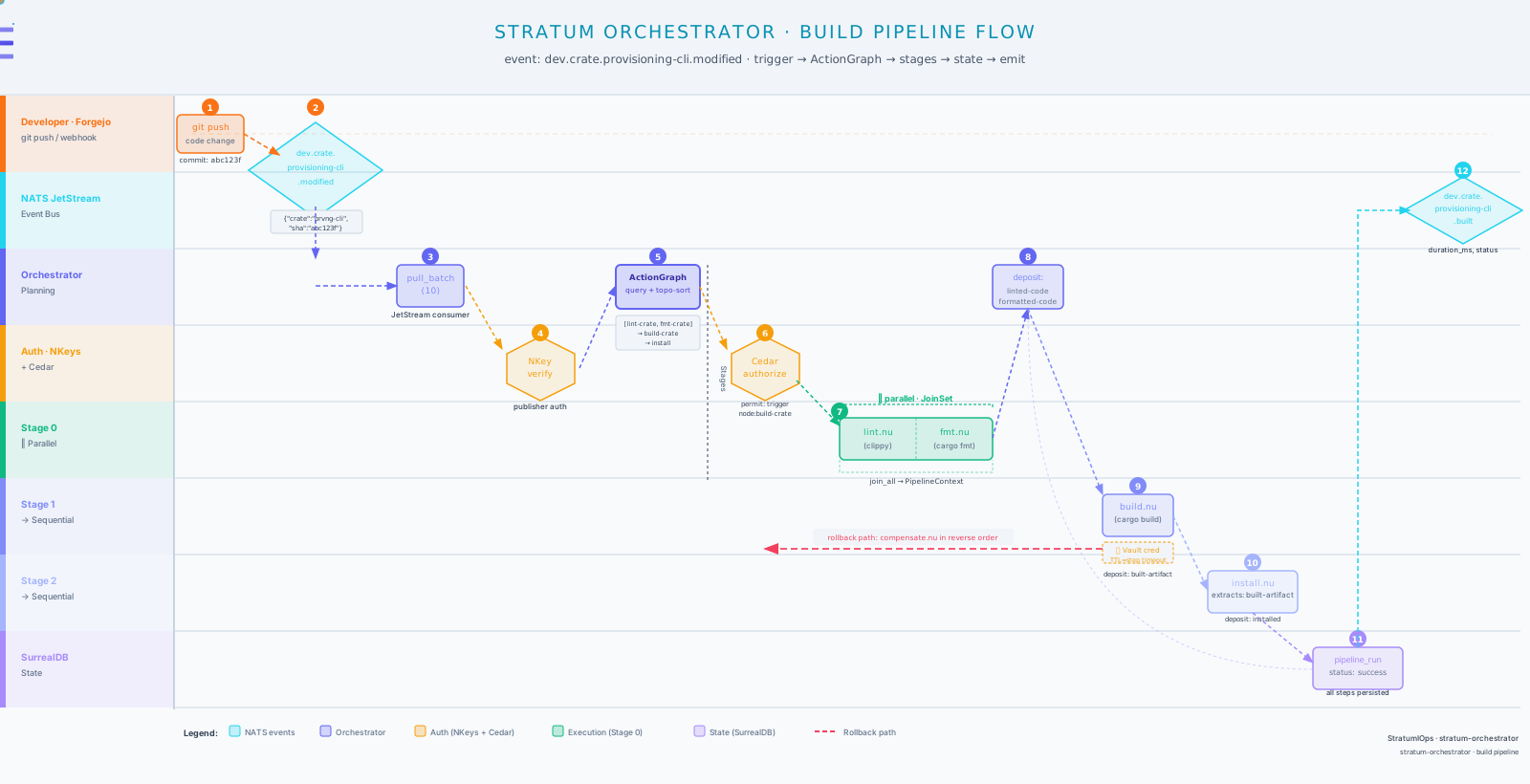
Build Pipeline Flow
Crate Structure
Technology Stack
Startup Sequence
Boot order — deterministic
Each step is a hard dependency for the next. No lazy initialization, no optional deferred loading.
Accepted trade-offs
nickel export is a subprocess call per file at startup — ~50ms per node file, mitigated by parallel JoinSet load. Each node execution spawns a Nushell process — observable latency for sub-second scripts, acceptable for CI/CD. OCI cold starts require layer pulls, mitigated by local digest cache.
New workflows — zero orchestrator changes.
Add .ncl files. The graph resolves the rest.
Explore Architecture →